3 Key Questions You Should Ask Your Water Aerobics Instructor
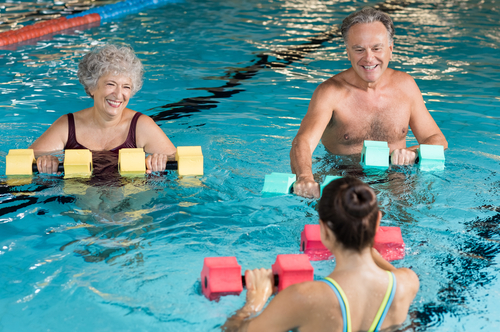
Are you looking for a group strength and cardio workout that you can take part in regardless of age or your current fitness level? If so, joining a water aerobics class may be the perfect choice for you.

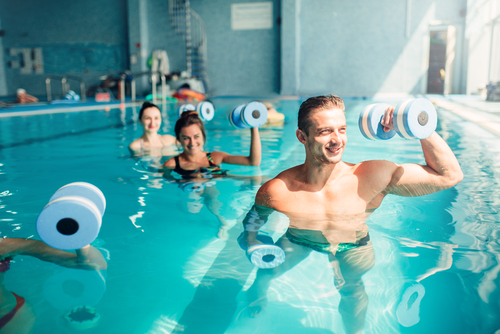
Aqua aerobics is a type of guided pool resistance training in San Diego. These workouts are all about building up your stamina, strengthening your body, and toning your muscles by performing various resistance exercises in shallow water.

If that sounds good to you, your next step is to choose a class and pick your swimwear. But how do you know which aqua aerobics class is best for you? What are the telltale signs of a first-rate water aerobics instructor? We’ll be answering these questions in the following article.

How do I choose the right aqua aerobics instructor?

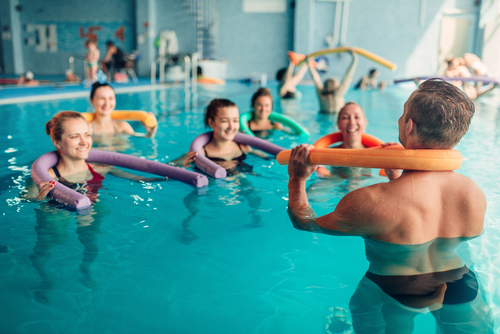
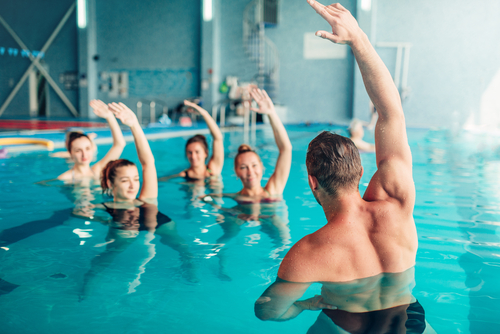
Water aerobics classes are fully guided by experienced trainers who are there to lead you through the workout and make sure you maintain proper form at all times. Because of this, finding an experienced instructor is absolutely vital in order to avoid injury and ensure your workouts are as effective as possible.

Here are 3 questions you should ask your aqua aerobics instructor:

1. Are they certified?

Like all professional trainers, water aerobics instructors need to have the relevant certifications in order to be legally allowed to work.

For added safety and peace of mind, almost all of them will also have a lifeguard certification, as well as CPR and First Aid certifications. This enables them to immediately assist participants in the case of injuries and respiratory or cardiac emergencies.

2. Do they ask you questions?

A responsible water aerobics instructor will want to know about any underlying medical conditions or previous injuries you may be dealing with. This enables them to customize the workout in a way that doesn’t accidentally aggravate your condition.

What’s more, they will keep a close eye on how the students are feeling during the workout and make sure they’re breathing correctly.

That being said, aqua aerobics instructors aren’t medical professionals. While they may spend some time researching various side effects, it’s still up to you to be open about your medical history and to notify the instructor if you start to experience any difficulties.

3. Can they inspire you?

Water aerobics classes are a group workout that’s supposed to be not just effective, but entertaining as well. This isn’t really possible if your instructor is unable to inspire your group, set a good tempo, and bring high energy into every class.

Reputable instructors will also go out of their way to foster a sense of community and camaraderie between the participants. By making you feel connected to the other people in your class, they turn the workout into something more than just physical activity: they actually make it an extremely enjoyable part of your life.

Where can I enter top-notch pool resistance training classes in San Diego?
pool resistance training in San Diego

Are you looking to enlist at a high quality water aerobics class in San Diego? Perhaps you’re in need of professional-grade swim lessons or a poolside daycare service? Or maybe you just want to find a great public pool to kick back at with your friends and loved ones?

Located just a short walk away from the gorgeous Bonita Cove, The Plunge can meet all those needs and more! Our historical swimming pool spans 10,500 square feet and offers visitors the full range of poolside services.

Give us a call today if you’d like to make a reservation or learn more about who we are and how we operate.
Beginner’s Guide to Water Aerobics: All You Need to Know

When thinking about exercising in a swimming pool, the first thing that comes to most people’s minds is doing laps in an olympic pool or taking part in a water-based sport such as water polo or water volleyball.

While there’s no doubt that all of these water-based activities are extremely good for you, they can also be difficult to organize and aren’t very accessible to elderly or young individuals. That’s where a San Diego water aerobics workout comes in.

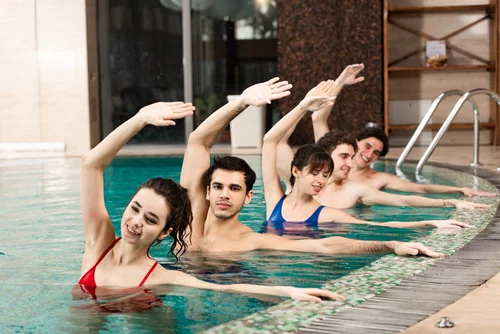
Aqua aerobics are a type of group workout that’s performed in shallow water. It emphasizes low-impact cardio and strength exercises that are perfect for individuals who don’t exercise regularly or suffer from conditions such as arthritis. Read on to learn more about the basics of aqua aerobics!

Do you have to know how to swim to do water aerobics?

Not at all. Water aerobics classes mostly take place in shallow water, with the participants always being able to touch the bottom of the pool with their feet. Even though some water aerobics classes use deeper parts of the pool, the participants always wear buoyancy belts during these activities.

Aqua aerobics classes are recommended for non-swimmers because they can help them learn how to swim by getting them more accustomed to water and water-based movements in a safe and gradual manner.

Of course, you don’t have to be a non-swimmer to enjoy and benefit from water aerobics. If you’re the sort of person who doesn’t like swimming all that much and prefers to play around in shallow water, you’re going to absolutely love aqua aerobics!

How often should a beginner do water aerobics?

If you’re a complete newcomer to the world of aqua aerobics (or even a newcomer to physical exercise), a great rule of thumb is to start with 3 classes per week. This is frequent enough to allow you to really get immersed in water aerobics without needing to make huge adjustments to your weekly schedule.

Once you become a regular and really start building up your stamina, you’ll gradually increase the number of classes to 4 and even 5 per week. Most importantly, the more you get used to your group, the more you’ll start to think of your classes as a fun activity rather than a workout.

Here’s why:

Taking part in water aerobics is easy

Water aerobics classes are led by an instructor and don’t require any equipment aside from basic swimwear. There’s no need to study routines, plan out your exercises, or worry about your form. All you have to do is show up and let your instructor guide you.

Most groups are very friendly

People who attend aqua aerobics classes tend to interact a lot and have a carefree attitude. This makes water aerobics much more relaxed than competitive sports such as water volleyball or water polo, and a lot more fun than solo workouts such as lifting weights or swimming laps.

Where can I attend a first-rate San Diego water aerobics workout?

Do you have to know how to swim to do water aerobics

Located at Mission Beach, right between the Pacific Ocean and Mission Bay, The Plunge has the distinction of being one of the oldest and most luxurious swimming pools in San Diego. At 60 feet wide and 175 feet long, it includes both recreational and sports swimming areas for individuals of all ages.

In addition to taking part in the very finest aqua aerobics classes in Southern California, visitors can use premium daycare services, swimming programs for both beginners and longtime swimmers, and even rent the pool for private parties. Drop by today, or give us a call if you have further questions about the best public pool in San Diego!

How Water Aerobics Can Help You Relieve Lower Back Pain

Are you suffering from pain in the lower back? If so, you’re not alone. Over 540 million people worldwide regularly deal with some kind of discomfort in their lower back. That’s more than 1 person in 10, and things are only expected to get worse with time, especially in low and middle-income countries.

During the recent years, it has been shown that water-based exercise can help alleviate lower back pain. This is because water workouts place minimal pressure on the hips, knees, joints, and back, which makes them especially useful for people who are suffering from conditions such as arthritis. 

We previously gave you a quick rundown of what water aerobics is and listed some of the many benefits aquatic exercise brings. Now we’ll explain how aqua aerobics classes in San Diego can help you reduce lower back pain. Read on to learn more. 

Is water aerobics good for lower back pain?

Absolutely. Since water buoyancy supports up to 90% of your weight, you can perform a broader range of motions without having to worry that you’ll end up over-straining your back. So grab a swimsuit and whatever other water aerobics equipment you may prefer, and get started! 

Here are some basic aquatic workouts you may want to try:

  • Kickboard balancing. Sit on a swim bar or a kickboard and try to engage your abdominals while keeping your spine straight. Rest your legs naturally, raise your arms out to your sides, and place your hands on the kickboard. Hold this position for a minute.
  • Water walking is exactly what it sounds like. Just walk around the swimming pool by taking long strides both backward and forward. Start in the shallow part and then gradually make your way to chest-high water. Keep your torso stable and your spine straight, and swing your arms.
  • Superman stretches involve holding onto the side of the swimming pool with both hands. Keep your arms straight and wider than shoulder-width apart, and float on your belly in the water. This is a great way to give your back muscles and vertebrae a full-extension stretch. 

Is it OK to exercise with lower back pain?

It depends on the type of workout you’re doing and the cause of your lower back pain. As a general rule, lifting heavy weights, high impact cardio (road cycling, sprinting), hyperextensions and back extensions, toe-touches, and other difficult exercises should be avoided if you have a bad back.

However, in many cases, lower back pain is caused by underdeveloped core and back muscles that result in extra stress being placed on the back. This often leads to a sort of a Catch-22: your lower back hurts because your muscles aren’t strong enough, but you can’t strengthen these muscles because your lower back hurts. 

This is where water-based workouts come in. Aquatic aerobics enables you to build up these muscles without putting an unpleasant and potentially unhealthy strain on your lower back. The water also naturally massages your muscles, which further alleviates discomfort. 

Where can I find first-rate aqua aerobics classes in San Diego?

Is it OK to exercise with lower back pain

If you’re looking to take part in top-quality water aerobics classes held by experienced trainers, look no further than The Plunge. Located just a short walk from the Giant Dipper, we’re a historic San Diego swimming pool that provides its clients with the full range of water-based exercise, entertainment, and relaxation services. 

In addition to aquatic aerobics, our visitors can also take advantage of our superb public pool, daycare programs, swimming classes, party rentals, and more. Visit us today, or give us a call if you’d like to learn more about who we are and what we offer.

5 Must-Have Pieces of Aquatic Exercise Equipment for Water Aerobics

Water aerobics is a special type of aerobic exercise that is performed in shallow water, usually at a swimming pool. This kind of exercise is usually done with the person standing upright with at least one of their feet touching the bottom of the pool.

Water aerobics has been shown to be an extremely effective way to stay healthy, lose weight, and alleviate conditions such as lower back pain, aching joints, and other mobility problems. 

In previous articles, we explained what water aerobic exercises are and listed the main benefits of aquatic aerobics. Now we’ll expand further on this topic by giving you a list of 5 useful tools that will help you get the most out of your aquatic aerobics classes in San Diego. Keep reading to learn more. 

What equipment is needed for water aerobics?

If you’re a newcomer to the world of aquatic aerobics, the only equipment you really need to get started is a swimsuit and a towel. Goggles may also be helpful if your water aerobics class involves a lot of splashing or your eyes are sensitive to chlorine.

In addition to that, here are 5 great tools for aquatic aerobics:

1. Kickboards

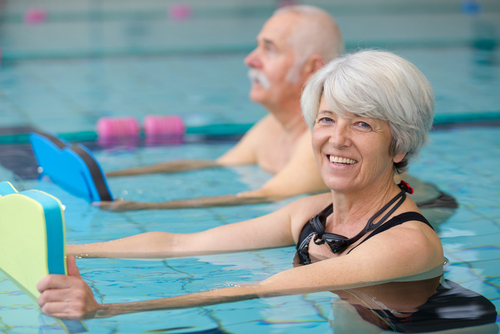
Kickboards are a tried-and-true way of exercising your lower body during an aquatic aerobics class. They can be used to perform freestyle kicks, breaststroke kicking, and fly kicking (also known as dolphin kicking). 

2. Water jogging belt

Water jogging is a great way to get all the benefits of running without any of the strain it can apply on your hips and knees. Having a water jogging belt enables you to remain buoyant while doing water jogging, without having to worry that the belt will chafe your skin or slide upwards as you jog.

3. Aquatic dumbbells

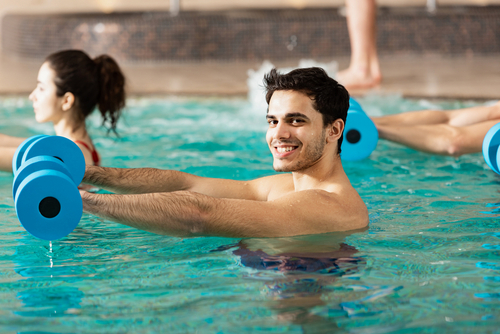
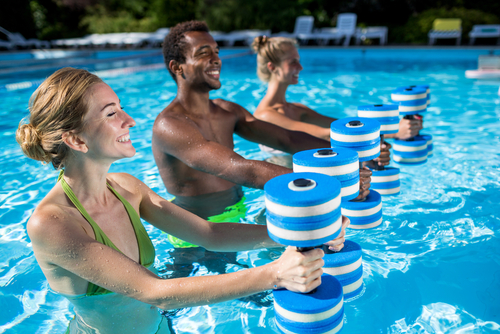
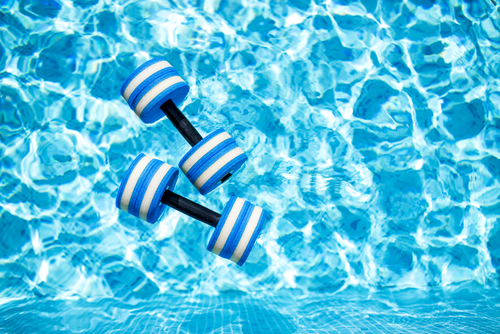
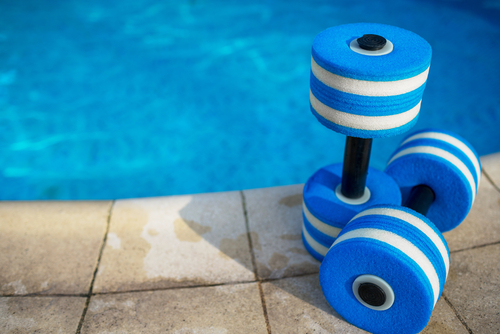
Unlike standard weight lifting exercises, the challenge with water dumbbells comes from how hard they are to submerge rather than lift. For this reason, these dumbbells are made out of buoyant foam and available in a few different resistance levels. They can be used for tricep pushes, flies, bicep curls, and more.

4. Wrist and ankle weights

A simple way to make your aquatic aerobic exercises more intense is by adding weights to your arms and legs. Furthermore, you can get adjustable weights that enable you to increase the weight as you grow stronger without having to invest into additional weight sets. 

5. Swim bar

These bars can be used for a number of different purposes such as stabilization while kicking (similar to how you would use a kickboard), as well as strengthening exercises. 

Do I need shoes for water aerobics?

More advanced (and strenuous) water aerobics workouts require you to wear special water shoes. When choosing the right shoes for your water exercises, make sure to pick a model that uses foam padding, rubber souls, and has good ventilation.

Although many water shoes come in one-size-fits-all styles, it’s highly advised that you find water shoes that perfectly fit the size of your feet. Doing so will prevent unnecessary discomfort while training. 

Where can I enlist at top-quality aquatic aerobics classes in San Diego?

Do I need shoes for water aerobics

Having the right equipment is all well and good, but it’s the swimming pool itself and the group you’re exercising with that will ultimately determine the effectiveness of your water aerobics workouts. 

Located right next to the gorgeous Mission Beach, The Plunge is a landmark pool in San Diego that offers its clients first-rate water aerobics classes that include both shallow and deep water workouts. Visit us today and take full advantage of our state-of-the-art facility and our many water-based programs.

The Ins and Outs of Water Aerobics

The term “water aerobics” refers to a set of anaerobic exercises that are performed in a swimming pool or another reasonably shallow body of water. Although it counts as resistance training, water aerobics requires minimal equipment and instead relies on the water itself to provide the resistance that strengthens the muscles.

In order to help you decide if this type of workout is right for you, we have prepared a brief guide on San Diego water aerobics and answered some common questions people have about this kind of water exercise. Read on to learn more.

What type of exercise is water aerobics?

Water aerobics (also called aqua aerobics) is a low impact anaerobic workout that’s done in water. Most of these exercises are done while the individual is standing upright, and generally do not include swimming or use of heavy equipment.

This makes injuries extremely unlikely and doesn’t strain the joints. As a result, water aerobics is especially popular with seniors, individuals who are recovering from surgery, and people with chronic conditions such as lower back pain.

You should consider doing aqua aerobics if you’re looking to:

  • Work out all major muscle groups
  • Lose weight and burn calories
  • Improve your coordination and balance
  • Relieve stress and anxiety
  • Improve the quality of your sleep
  • Increase your flexibility
  • Control your blood pressure
  • Lower your blood sugar and cholesterol
  • Tone your muscles
  • Reduce lower back pain
  • Improve your cardiovascular health
  • Exercise during pregnancy

Is water aerobics considered cardio?

Most people associate the term “cardio” with long distance activities such as biking, running, hiking, or swimming. Although these activities indeed fall under the cardio umbrella, the reality is that any exercise can count as cardio.

This is because, in fitness terms, cardio is any exercise that raises your heart and breathing rates, while also boosting the function of your lungs, heart, and circulatory system. This helps you burn calories, improves your metabolism, and strengthens your lungs and heart.

So the answer is yes, water aerobics definitely counts as cardio. However, it also incorporates resistance training because your muscles are constantly “fighting” against the buoyancy of the water. This not only strengthens and tones your body, but also enables you to burn extra calories.

What should I expect from my first water aerobics class?

Aqua aerobics classes generally take part in reasonably shallow water. Since you’ll always be able to keep at least one foot on the bottom of the pool, you don’t have to be a strong swimmer to engage in water aerobics. All you really need is a swimming costume!

A typical water aerobics class includes:

  • A short warm-up that gets your muscles ready for the workout
  • Cardiovascular exercises designed to get your blood pumping (jogging, body twists, leg kicks, arm stretches, etc.)
  • Balancing exercises
  • Coordination exercises
  • Stretching exercises
  • Cool-down exercises at the end of the workout (these are necessary to prevent injury or soreness)

Your aqua aerobics class may also include props such as ankle weights, pool dumbbells, webbed gloves, floats, and other items designed to increase resistance and make the training more effective.

Where can I enroll in a first-rate San Diego water aerobics class?

Is water aerobics considered cardio

Located right next to the Mission Beach Boardwalk, The Plunge has been the top public pool in San Diego for nearly a century. In addition to the famous 10,500 square foot pool, members and visitors can also enjoy high-quality swim lessons, water aerobics programs, and even rent the pool for private parties.

Give us a call today if you’d like to learn more about who we are and what we provide, or if you’d like to inquire further about our day rates and membership benefits. We can’t wait to meet you!

Why Aqua Aerobics Is So Great: Top 5 Benefits of Water Aerobics

Are you looking for a fitness program that can help you tone your body and lose weight without forcing you to spend long hours on the treadmill or the exercise bike? If so, water aerobics in San Diego may be just the thing you need!

But what exactly is water aerobics, and how is it different from regular aerobics? Can you get injured while doing water aerobics? What are the 5 main benefits provided by water aerobics? Keep reading to find out!

Is water aerobics better than regular aerobics?

Also known as aqua aerobics, water aerobics is a fun-filled fitness routine that’s suitable for individuals of all ages. Since it involves full-body exercises that rely on natural movements and take full advantage of all the wondrous benefits of water, aqua aerobics can quickly have an extremely positive impact on your overall fitness.

Here are the 5 main reasons why aqua aerobics is better than regular aerobics:

1. It’s 100% safe

Water aerobics is a low impact exercise. This means there’s almost zero risk of injury, as long as you take things slowly and gradually. This is especially important for people who suffer from lower back pain and other medical conditions that can be aggravated by sudden movements.

2. It’s good for your mental health

Engaging in water aerobics can be extremely relaxing and refreshing. This has the benefit of helping you sleep, relieving depression, alleviating anxiety and stress, and boosting attention levels in children who suffer from ADHD (Attention Deficit Hyperactivity Disorder).

3. It’s great for weight loss

You can easily burn 500-1000 calories per hour while exercising in water. This is because the cold water prompts your body to burn more calories to warm itself up, therefore helping you lose weight. What’s more, the water naturally massages your muscles as you exercise, which helps tone them.

4. It builds up your physical stamina

While doing aqua aerobics, your every move causes your muscles to “fight” against water resistance. This naturally increases your physical endurance and strengthens your muscles. Spending time underwater also helps your lungs stay healthy. This is particularly healthy for people who suffer from respiratory conditions such as chronic bronchitis.

5. It keeps your heart healthy

Not only is exercising a great way to build up your cardiovascular strength, but the water’s pressure in the swimming pool also helps your blood circulate by lowering your blood pressure. This makes it easier for your heart to pump blood through your body.

How often should you do water aerobics?

For most people, exercising for 45 minutes 4 times a week is the minimum amount of water aerobics necessary to see notable results. If all you’re looking for is to maintain your current fitness level, 3 training sessions per week should be enough.

That being said, there are various factors that may affect how frequently you should engage in this type of workout. These include your age, fitness goals, and any underlying medical conditions you may have.

It’s best to get in touch with a reputable fitness club that provides water aerobics classes and consult with the trainers directly.

Where can I enlist in top-notch water aerobics classes in San Diego?

How often should you do water aerobics

Located near the gorgeous Mission Beach, The Plunge is a luxury swimming pool in San Diego that has been around for more than 95 years. At 175 feet long and 60 feet wide, this public pool is one of the largest in all of South California.

In addition to water aerobics classes and swim lessons, our offering includes poolside daycare, private parties, various amenities, and more. Reach out to us today if you’d like to learn more about our membership options or learn more about why we’re the best!

Daycare Packing List: Crucial Items Your Child Will Need at Daycare

One of the scariest moments in every parent’s life is when they have to drop off their child at daycare for the first time. There are so many doubts in your mind: is your child ready for daycare? Are they going to be safe? Will they get along with other kids and their childcare providers

With all these questions, the last thing you want to worry about is whether you’ve packed all the things your kid will need during their stay at a San Diego daycare. Here at The Plunge, we’d like to make things easier for you by giving you a universal packing checklist that includes all the items your kid will need at daycare. Read on!

What does a child need for daycare?

First off, you should grab a magic marker and some plain white labels (or order pre-printed name labels), and ensure every item has your child’s name on it. This will avoid confusion and make the time they spend at daycare a lot easier for your child and their caretakers.

Make sure to pack some or all of the following:

  • Extra outfits. For toddlers and other small kids, don’t hesitate to pack 3-4 changes of clothes, as well as some additional diapers. For bigger children, 1-2 outfits and some extra pairs of underwear should be enough. 
  • A durable lunch bag. Lunch bags live a hard life, so you want to make sure the one you get for your kid is able to withstand all that abuse without smashing the food inside or spilling it all over the floor. Furthermore, refrain from packing food that can easily get spilled or otherwise ruined inside the bag. 
  • A few bibs. Even the most well-behaved kid tends to be something of a slob at the dinner table. For this reason, having a couple waterproof bibs on hand is never a bad idea, as it’ll keep your child’s clothes from getting wet or messy during meals.
  • Clean indoor shoes, preferably ones equipped with no-slip grips on the bottom. This will help keep the daycare itself cleaner (and all the kids in it healthier), and ensure your child has the appropriate footwear for play and exercise. 
  • Medications. If the daycare policies allow, prepare a bag of medicine that you’d like your kid to have if they’re feeling uncomfortable. Make sure to let the daycare center staff know about these medications and to provide the necessary guidelines for how they should be administered. 
  • Beloved toy or similar item. Letting your child take a comfort item or two to daycare will not only give them more things to play with, it’ll also make the daycare feel more like home. This can be hugely effective when it comes to helping your kid transition into daycare

san diego the plungeWhat’s the best San Diego daycare for my child?
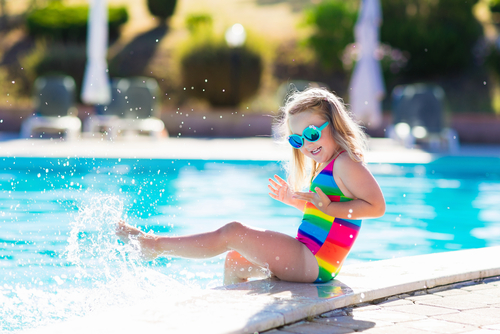
Nothing in life is as important as making sure your children get proper care as they grow and develop. For this reason, choosing the right daycare camp that provides your child with endless opportunity to exercise, socialize, learn, and have fun, is one of the most essential things you can do as a parent. 

If you’re in need of a tried-and-true poolside daycare center in San Diego, look no further than The Plunge historic swimming pool at Belmont Park. With a tradition that spans nearly a century and boasts gorgeous panoramic views, a state-of-the-art daycare, group swim lessons, rental options for private parties, and more. 

Visit us today, or give us a call if you’d like to learn more about why we’re San Diego’s #1 public pool! 

Top 3 Ways to Prepare Your Child for Daycare

Starting daycare is a huge moment in any kid’s life. For many children, it’s their first time being away from their parents or grandparents for an extended period of time, not to mention their first time interacting with a large group of other kids. 

Even if your child has been to daycare before, going to a new daycare is still a considerable transition. Parents are advised to do a few things beforehand to ensure their little one’s first day at the new daycare is as stress-free as possible

Here at The Plunge, San Diego, we’d like to help you do just that by providing you with a list of 3 easy ways to get your child ready for their first day at daycare. Keep reading to learn more. 

How do I transition my child to daycare?

Choosing the right childcare program will not just aid the development of your child, but also be an extremely fun experience for them. These benefits can be further increased by taking a little time to make the daycare transition as easy as possible for your kid. 

Here are 3 tried-and-true ways to prepare your kid for daycare:

1. Visit the daycare beforehand

The first day at daycare doesn’t have to be the first time your child actually sees the facility and meets the teachers. By visiting once or twice before the big day, you’ll be familiarizing your child with the place and make it easier for them to acclimate. 

2. Leave your kid with a babysitter for awhile

If your kid rarely spends time away from you, a good way to get them used to the idea is by leaving them for a few hours with a babysitter or a neighbor while you go out for dinner or a movie night with your significant other. 

3. Pack everything up

Packing 3-4 changes of clothing, multiple diapers, baby formula, and more, for a few hours at daycare may seem excessive, but you’d be surprised by how often packing for daycare is actually necessary. If your children are a little older, 1-2 outfits and some additional underwear should be enough. 

Another great idea is to provide your kid with a comfort item or two as well. A stuffed animal or a blanket that reminds them of home can make them feel less exposed and make it easier for them to adjust to being away from their parents. 

How can I help my child settle into a daycare camp?

It’s important to remember that a child’s world is much smaller than an adult’s. They haven’t been to nearly as many places or met as many people, and as a result, spending a few hours on their own can be both extremely exciting and scary. 

For this reason, parents should discuss the upcoming daycare visit as much as possible with their kid. Read them stories and watch shows that depict fun and interesting daycare experiences. The goal is to make them understand that daycare is a great place for a child to be.

How can I help my child settle into a daycare camp

Does The Plunge in San Diego offer quality poolside daycare?

You know what’s better than a first-rate daycare with seasoned teachers and an age-appropriate curriculum? A daycare that has all that, but also includes a cutting-edge swimming pool, numerous daytime activities and exploration, and even kid yoga classes and lessons in Fine Arts.

At The Plunge, San Diego, we boast all that and more! Located within a walking distance from the Giant Dipper, we can proudly call ourselves the finest public pool and daycare in the city. Come visit us today! 

How to Choose the Right Daycare Camp for Your Child

Today’s parents are busier than ever. Between work, commute, housekeeping, and other obligations, it’s often difficult to find the time to provide your children with the fun and exercise they need to develop correctly and enjoy their day to the fullest. 

The easiest and most effective solution to this problem is to take your kid to a quality daycare camp in San Diego, such as the one at The Plunge swimming pool. This gives you the time you need to deal with your responsibilities, while also ensuring your child’s needs are met in a fun, safe, and educational manner.

But how can you tell if a particular daycare camp is right for your child? What are the telltale signs of a top-of-the-line daycare camp? Keep reading to find out!

What should I look for when choosing a daycare camp?

Your daycare camp of choice should be focused not just on offering fun activities for your kids, but also with facilitating their education, making sure they get enough exercise to really let out their energy, and providing them with healthy and well-balanced meals. 

Here’s what you should look for when picking a daycare camp for your kid:

1. Activity-based curriculum

Quality daycare camps use optimized curriculums that include not just physical activity, but also arts and science. Furthermore, they should help kids keep up with distance learning by providing them with special classrooms that allow them to attend their classes and school meetings via Zoom or a similar video call program. 

All this serves to exercise your child’s mind in a fun and engaging manner, while also providing a regular schedule that includes everything else your kid needs. 

2. High-quality workout time

There’s no better way for a child to exercise than at a first-rate swimming pool that’s constantly monitored by experienced lifeguards and mentors. Water-based activities are fun, extremely safe, and serve as a whole-body workout that helps your kid develop properly.

Other great physical activities for kids include:

  • Various sports
  • Kids’ yoga
  • Miniature golf
  • Ropes course
  • Rock wall climbing

3. Safety

In addition to making sure your children are safe while they’re inside the pool, top-of-the-line daycare camps should follow extensive cleaning standards and observe all relevant government safety regulations.  

4. Flexible scheduling

People who run successful daycare camps understand that working parents frequently have to juggle numerous time-consuming responsibilities on any given day, and that this often makes it impossible for them to plan everything out in advance. 

In order to meet the needs of busy parents, reputable daycare camps offer hourly, daily, and weekly drop-in scheduling options, as well as early drop-off and late pick-up. They will go out of their way to align themselves with your busy schedule and ensure your kids get the most out of however much time they can spend at the daycare camp. 

5. Pedigree

Your kids’ comfort and safety is too important to be entrusted to a “budget” daycare camp that may or may not be trying to cut corners at every turn. For this reason, you should always pick a well-known daycare camp that has been around for awhile and boasts an impeccable track record. 

san diego plungeEnjoy our premium San Diego poolside daycare camp at The Plunge
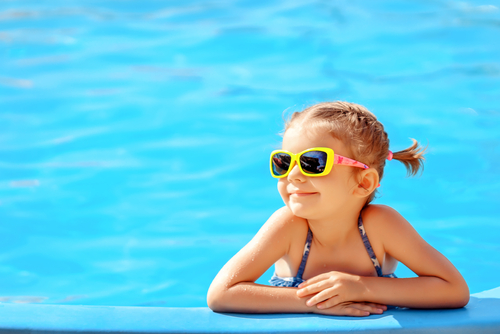
Located inside of Fit Mission Beach at Belmont Park, the historic San Diego Plunge is a public pool with a tradition that’s almost a century long. In addition to a state-of-the-art daycare camp for children aged 5-12, it also offers both private and group swimming lessons, water aerobics, public pool services, party rentals, and more. 

Make your reservation today or give us a call if you’d like to ask further questions. We can’t wait to hear from you!

Daycare Camps 101: Should You Send Your Child to a Daycare Camp?

Giving your kid a break from the usual is just as important as providing them with a safe and organized environment. A great way to do this is by taking them to a poolside daycare camp such as the one at The Plunge, San Diego, where they can take part in various fun and educational activities. 

Read on to learn more about what these camps are and how they work. 

What are the advantages of a daycare camp?

Poolside daycare camps are designed to provide both education and fun. By enabling you to focus on your responsibilities while also ensuring your kid has a great time, they’re also immensely useful to parents with busy schedules. 

Advantages provided by daycare camps include:

Consistent schedule and activities

By following a consistent and well-rounded schedule every day (even for younger kids), a daycare camp makes sure your child gets the appropriate amount of physical activity and learning, and is fed high-quality meals.  

Enhanced education

First-rate daycare camps have designated classroom spaces for kids who have to attend their school meetings remotely via Zoom or similar video call software. Furthermore, they include a variety of crafts, science projects, and educational enrichment activities. 

Kids love them

Put yourself in your child’s shoes: is there anything you’d enjoy more than spending an entire day at a top-notch swimming pool, surrounded by kids your age, and learning interesting new things? 

Does daycare affect a child’s development?

Daycare camps are all about giving kids an opportunity to remain active while learning or participating in different activities. By helping them exercise both their minds and their bodies, daycare camps positively impact a child’s development over the long term.

Here are some of the ways a poolside daycare camp helps children develop:

  • Swimming is an excellent full body workout that carries very little risk of injury. It’s particularly useful for kids who are suffering from chronic bronchitis and other respiratory conditions, as it helps them strengthen their lungs. 
  • It fosters social skills. Knowing how to make friends and get along with others is a crucial life skill. By spending a lot of time around other children in a safe and controlled environment, your kids will have ample opportunity to build their social skills
  • It boosts the immune system. Although it may seem that kids at the daycare are constantly sick, the reality is that all those early sniffles serve to toughen up your kid’s immune system in the long run. 

What age should you send your child to a daycare camp?

The best age to send kids to a quality daycare camp is between 5 and 12 years old. At 5 years old, children are at the point in their lives where they’re still too young for school, but old enough to start partaking in organized physical and educational activities. 

For school-age kids, daycare camps can serve as an excellent way to spend the day while their parents are at work or otherwise occupied. This way, the child gets to have fun, stay active, and learn new things, and the parent doesn’t have to worry that their kids aren’t making the most of their precious summer vacations. 

Does daycare affect a child's developmentVisit our top daycare camp at The Plunge, San Diego

Located in Mission Beach, The Plunge is a state-of-the-art public pool in San Diego that was first built all the way back in 1925. Our daycare camp opens at 12:30pm and closes at 5:30pm, Monday through Friday, and can be scheduled with hourly, daily, or weekly drop-in options. 

Feel free to visit us today or give us a call if you’d like to learn more about what we offer. We’re eager to meet you! 

online waiver waiver app electronic waiver digital waiver