4 Tips on How to Prepare for a Private Swim Lesson
We all know that one of the most relaxing things a person can do is to immerse themselves in water and swim without having any fear of it. However, this activity is not easy or possible for everyone. 

In order to learn to swim and overcome aquaphobia, many people first need to take private swim lessons in San Diego, CA, so that they can learn the basics of this healthy and fun activity. To help you do just that, we’ve prepared this article with 4 helpful tips on how to prepare for swimming lessons easily and efficiently. Read on!

How do you prepare for swimming lessons?

Many people shy away from swimming lessons, feeling embarrassed or thinking it’s too late to learn. However, swimming is a skill everyone should acquire at some point in their lives. You won’t only feel more confident and safe in the water, but will also notice significant health benefits and feel less stressed and anxious.

Here is how to prepare for your first lessons:

Tip #1: Swimwear

Finding the right swimming suit is an essential part of preparing for your swimming lesson. You can choose between swim costumes, shorts, t-shirts, trunks, and other options. Ensure there is no risk that the swimsuit will fall off when you jump into the water. You’ll be moving a lot and you’ll need to pay all your attention to the lesson itself which is why you want to make your choice carefully. To be 100% secure, try several options at home.

Tip #2: Wear a swimming cap

Whether you like it or not, a swimming cap can protect your hair from chlorine and noticeably reduce the water tension. If you have long hair, make sure to tie it up so it doesn’t slip out. Most of the swimming caps are made of latex so if you’re allergic, try to find one that doesn’t contain it. Wearing swimming caps doesn’t only benefit your body but keeps the pool more hygienic which is the reason why it’s often mandatory in some pools.

Tip #3: Waterproof bag

You should have a waterproof bag where you’ll keep your swimming costume, cape, goggles, and other equipment that will be soaking wet after the lesson. Apart from that, this bag will protect your other items from splashes. Make a list with all the essentials you’ll pack inside your bag and keep the list as a reminder. Before you place your wet swimsuit or towel, make sure to leave it to dry a bit.

Tip #4: Arrive earlier and eat light food

Make sure you arrive at least a couple of minutes before the lesson starts. You’ll need some time to change into swimwear and put your valuable things in a safe place and you don’t want to do it under the pressure of being late. 

Arriving there promptly is also one of the reasons why you should make sure the pool is near your home. Eat light food at least 30 minutes before you arrive there because you don’t want to experience any gastrointestinal problems.

Who offers professional private lessons in San Diego, CA, and the surrounding area?Who offers professional private lessons in San Diego, CA, and the surrounding area?
If you’ve decided to learn basic swimming skills or you’re planning on improving them, the Plunge is the right place for you. Our well-equipped venue offers an environment perfect for water exercise while our professional and qualified instructors are ready to go the extra mile and teach you new skills in a safe and proper way. 

Apart from private and group swim lessons, we offer options such as recreational swimming and premium day camps, as well as renting our venue for parties, events, lap rentals, and more. Here, you can relax, get the best out of every workout, and even party with your friends.

Whether you’re living near Sunset Cliffs Natural Park or in the vicinity, call us today and get the most out of our modern pool.
4 Amazing Health Benefits of Swim Lessons

It’s never too late to learn to swim and take advantage of all the benefits this activity has to offer. It doesn’t only ensure you survive when in the water but also boosts your health and helps you develop healthy habits. In order to overcome the fear of water and develop water skills, many people turn to professionals in San Diego for help. 

Whether you’re already looking for “private swim lessons near me” or you’re still considering this idea, knowing what health benefits swimming offers will show you why it’s one of the best options for your body. In the following article, we’ll help you do this by showing you the 4 most important health benefits private swim lessons offer. Read on!

Why are swim lessons so important?

Swimming not only improves your mood but also helps you take good care of your health. Here are the main 4 benefits:

Benefit #1: You’ll activate your entire body

You can rest assured no other exercise activates your entire body as effectively as swimming. If you start taking up these extremely useful lessons, you’ll activate your core, arms, shoulders, legs, hips, hands, and feet, giving your whole body a proper workout. 

Due to the constant resistance you’ll be experiencing in the pool, you’ll also practice your strength. While moving in slow, light motion, you’ll straighten your posture and learn how to coordinate your moves more skillfully.

Benefit #2: Prevents cardiovascular diseases

One of the benefits you’ll get from regularly practicing swimming is that this activity will improve your cardiovascular system. This means your heart will supply blood throughout the body more efficiently, building up your stamina for other physical activities such as running.

This activity is also known to reduce blood pressure. Repeated exercises in the water can reduce the hardening or stiffening of the blood vessels, minimizing the possibility of increasing your blood pressure as you grow older. 

Benefit #3: Burns calories effectively

It increases the heart rate and reduces your weight. With a healthy diet and this exercise, you can expect to burn more calories than you would while performing workouts on the ground. For example, you’ll burn approximately 100 calories more while jogging in the water than you would while jogging on land.

Lesson by lesson, you’ll be learning a diverse range of basic strokes and notice that different strokes burn calories at different rates. This offers a great opportunity to scale up and down during a workout.

Benefit #4: Strengthens your muscles

Although it’s not a perfect way to build up bulky muscles, a swim program is a perfect workout for toning your muscles and acquiring general physical strength. This activity is both cardio and resistance training that doesn’t put great pressure on your muscles or joints. 

This training program will target different muscle groups, giving you a more balanced and athletic figure than some other training. If you’re looking for a low-impact activity that will shape your body, swim lessons should be your choice.

Where can I find trusted private swim lessons near me in San Diego?Why are swim lessons so important?

If you’ve decided to acquire one more healthy habit and are ready to start learning the basics of swimming or honing your skills in the water, the Plunge San Diego is the perfect place to go. As a landmark with a quite long history, we’ve developed and improved over the years, matching our work to the needs of our customers.

Our staff is a group of dedicated professionals ready to make sure you practice new skills in a safe and friendly environment. We don’t only offer you the possibility to choose between private and group lessons, but also offer our venue for parties, corporate and private events, production and filming, lap lane rentals, and many more.

Whether you’re living near Mission Bay Park or in the vicinity, call us today!

What’s the Best Water Exercise Routine?

We all know how beneficial water exercise can be, but only if you develop a healthy and regular routine. If you’re interested in starting aqua workouts at one of the pools across San Diego, it’s important to make sure you get the most of them. This means thoroughly planning your program and following some healthy habits that go with it.

In order to help you keep your exercises effective, we’ve prepared some useful guidelines for you. 

How do I get the most out of my aqua workouts?

There’s a reason why ancient civilizations noticed the benefits of water. Whether you’re simply swimming or doing water aerobics, aquatic workouts can truly improve your well-being and even help you with losing your weight more easily. In order to maximize the benefits of water workouts, you should follow some tips and tricks:

Hydrate

Being immersed in the water often makes us forget we should also drink and stay hydrated. As swimming requires less effort and no visual signs of sweating while inside the pool, it’s important we schedule regular water breaks.

Warm up and cool down

Although your muscles will be less sore due to the hydrostatic pressure of water, your body is still making great efforts during the workouts. Make sure you warm up and cool down during and after the exercise, while also including stretching into your routine.

Vary your strokes

The more you vary your strokes, the more likely you are to target various muscle groups and work your shoulders, chest, and upper back. For example, mix up butterfly, freestyle, backstroke and breaststroke to maximize results.

Try aqua jogging and walking

Whether you choose jogging or walking, you’ll get reminded of exercises on land, but the fact is these are more effective in the water. You can use flotation devices or run and walk without them. These simple water exercises will improve your posture and serve you as a warm-up.

Make breaks

Organize your workouts so you have the time to take a short break after each part. This will ensure you don’t overwork yourself and help improve your performance. Even half a minute break can do wonders for your muscles and prevent injuries.

Try water aerobics

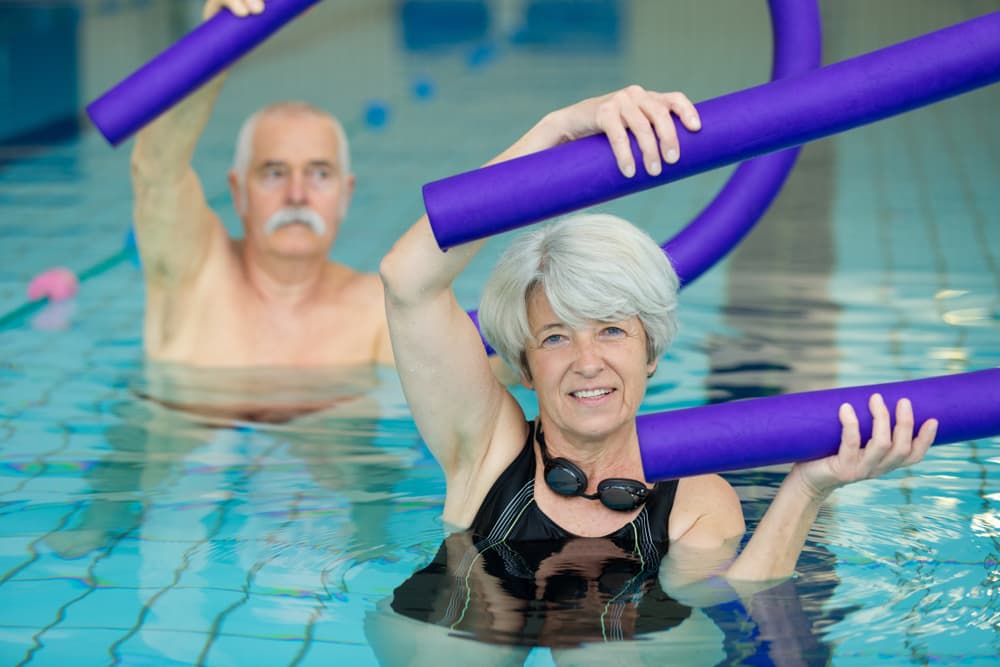
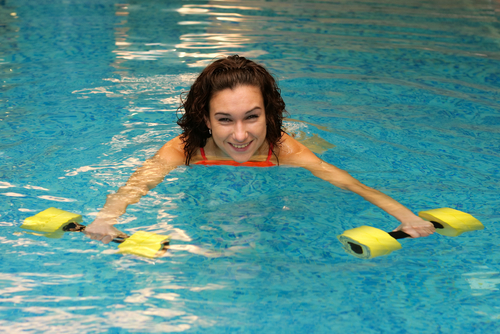
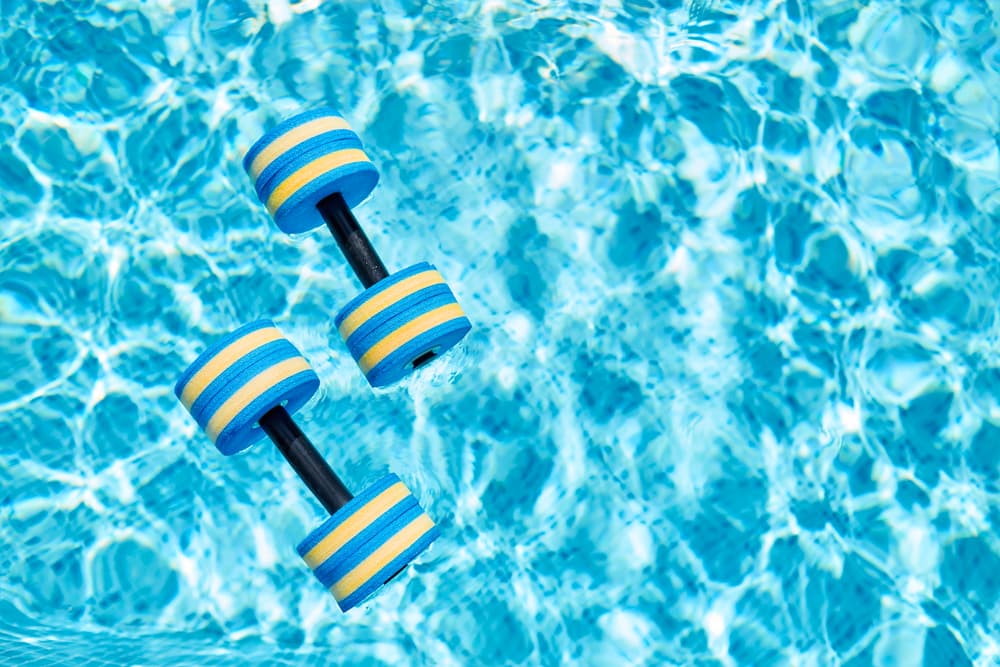
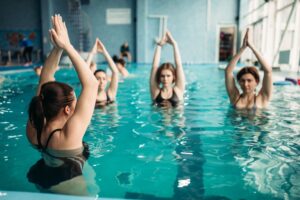
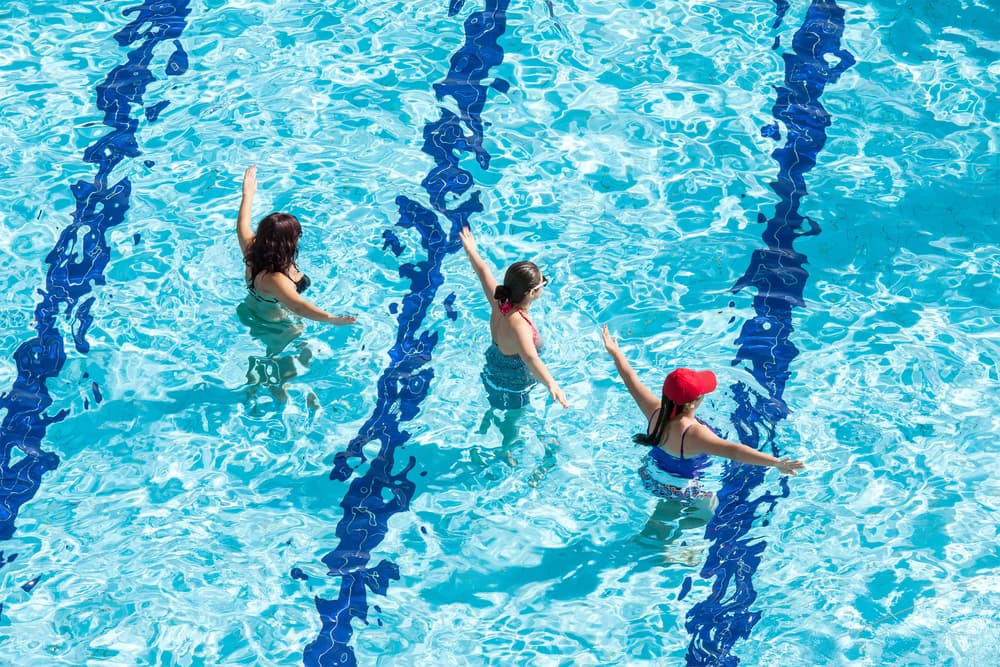
This water activity can be a perfect cardio exercise without making your joints hurt. You can tread water, do jumping jacks, use dumbbells, or ankle water weight for greater resistance. Practice at least 45 minutes 4 times a week to maintain your fitness level and see noticeable results.

What should I eat before aqua aerobics?


When preparing your pre-workout food, stay away from options that can cause you gastrointestinal troubles. These are most definitely excess fatty and spicy foods, as well as caffeine. However, you can eat foods rich in carbohydrates, proteins, and vitamins. This means you should aim for whole grain pastries and pasta, bananas, eggs, yogurt, smoothies, and other healthy and nutritious food choices.

What should I eat before aqua aerobics?

Who offers professional aqua workouts in San Diego and the surrounding communities?

If you’ve decided to start with aqua workouts or water aerobics, and want the help of knowledgeable and seasoned instructors, look no further than the Plunge. Located in a renovated historic building, we offer great amenities and professional services our guests can truly benefit from. With over nine decades of experience, our client-centered approach and a variety of membership programs makes us a perfect fit for people of all ages. Count on our experts to listen to your needs and help you lead a healthier lifestyle. Get in touch with us if you’re near Calumet Park or in the area.

7 Reasons Why Aquatic Exercise is Good for You

Every workout has certain benefits but you’d be amazed by all the positive effects water exercises can have. This is a great option for people of all ages who want to stay active and healthy. It’s also a low-impact exercise that takes the stress off your joints, muscles, and bones while helping you develop your muscles. These advantages are only some of the reasons why many people opt for reliable aqua workouts you can find across San Diego and the region.

To help you decide to take up water exercise today, we’ve prepared a list of 7 reasons why you should consider doing so.

Is aqua exercise effective?

There are numerous positive effects aquatic workouts can have on your well-being that can motivate you to create your perfect pool routine. Here are some of them:

1. Increases muscular strength

It is more difficult to move water, which is why our bodies have to work harder. Whether you choose to take a class, swim or simply walk, the water creates a resistive and aerobic environment that will maximize the intensity of your workout and increase your muscle endurance. 

2. Weight loss

Since water resistance is greater than air, it means you’ll get fuller workouts that will ensure you burn calories more easily than when on the ground. Even walking in water burns more calories than walking on land. Believe it or not, you can burn from 400 to 500 calories during one water aerobic class.

3. Healthier heart

Whether you opt for water aerobics or water exercises, it can significantly improve your cardiovascular health and strength. It can even lower your blood pressure by reducing the hardening of blood vessels. This is of great importance because high blood pressure becomes a problem as we grow older.

4. Helping you socialize

Group exercises are a great way to socialize, build connections, and find support from people that have the same goal as you. This will also help you stay motivated and teach you how to successfully function as a part of a group. You’ll notice water exercising is a really amazing social experience that can lead to new friendships.

5. Boosting your confidence

If you feel intimidated by usual exercises, pool workouts can boost your confidence. The water covers you and no one will see you if you make a wrong move. It’s also great for beginners who can build a certain level of fitness that will help them later when they are on land. 

6. Increasing mobility and flexibility

When in water, your body will experience resistance in directions it isn’t adapted to, as well as some of the movements and positions you’re not used to. This will increase the overall mobility and flexibility of your body and allow you to perform larger ranges of motion.

7.  Low pressure

The buoyancy of water is a reason why ancient Romans used it to treat arthritic joints and why we feel so relaxed when inside the pool. It feels as if our bodies and joints are under less pressure while in the water which makes us feel as if we’re weightless.

Where can I start with effective aqua workouts in San Diego?

Where can I start with effective aqua workouts in San Diego and the area?

If you’ve decided to do aquatic exercises and want reliable and professional instructors to assist you and teach you new techniques and skills, you’re more than welcome to come to the Plunge. Our place is both a historic landmark and the perfect place for swimming and exercising. 

We have a team of pros with the extensive knowledge and experience necessary to help you stay in good shape while teaching you something new every day. The options range from swim lessons for all ages to aqua fitness and water aerobic classes. What’s more, our venue is available for parties, production, and filming, as well as corporate and private events. If you live near Ellen Browning Scripps or in the area, come see us or get in touch!

Water Aerobics & Losing Weight

There are valid reasons why more and more people opt for trying out a deep water fitness class and other types of water workouts in San Diego and the region. Water aerobics is a great exercise that puts minimal pressure on the joints, helps you de-stress, and reduces anxiety. It’s also suitable for all age groups and is a great activity for all family members.

However, if you think that’s all, you’re making a mistake. This useful activity is beneficial for overweight people, too. It’s a healthy, effective, and interesting way to shed extra pounds. If you want to learn about the main reasons this exercise is great for burning calories, keep reading.

Is water aerobics good for weight loss?

Water aerobics originates from the United States and is extremely beneficial for both mental and physical health. When it comes to the body, it is a great way to build and tone your muscles, as well as lose weight.

Here are the main reasons why water aerobics is great for weight reduction:

It burns calories

By exercising in the water, you increase the chances of burning calories for a shorter period of time. Even walking in the water is harder than on land due to the water resistance. If you combine it with the strength and cardio workouts, rest assured you’ll effectively burn fat and tone your body.

Frequent workouts

For optimum results, you should do at least 150 minutes of water aerobics a week. This means you’ll have to practice frequently: around four times a week. Since it is much more interesting than some other workouts, you’re more likely to stick to doing it regularly. This will ensure you form an effective and useful fitness routine you won’t quit.

A variety of exercises

This type of activity offers you a wide range of exercises you can choose from and combine. Some of them are:

Vertical water workouts
When exercising vertically, the resistance is much higher than when swimming horizontally.

Water walking
It is an easy and effective way to lose weight. Try walking sideways and backward or lift your knees for higher intensity.

Water running
This is an excellent and intense cardio exercise. You should kick the water behind you while making sure your feet are not touching the bottom.

Pool plank
It’ll activate multiple muscles while strengthening your core and tightening your abs.

Kickboarding
Use a kickboard and paddle only using your legs. This is an easy activity that can burn around 270 calories in forty-five minutes. 

Suitable for everyone

When performing water aerobics, your body undergoes a lot less stress and pressure making it a suitable weight-loss activity if you’re extremely overweight or have joint problems. Due to its reduced pressure on the joints and massaging of the body, this is a great option for older people and individuals with anxiety. 

Where can I go to a deep water fitness class in San Diego?

Where can I go to a deep water fitness class in San Diego and the surrounding area?

Whether you’re looking for a senior-friendly water activity, want to lose weight, or simply have fun, The Plunge offers you a variety of water workouts suitable for everyone. Whether you choose water aerobics or improving stroke techniques, our qualified and friendly instructors are at your service. They have the extensive knowledge and experience necessary to improve your skills and make sure every class is beneficial for your body strength and health. 

Apart from that, our facility is well-equipped for birthday parties, corporate and private events, as well as for filming and production purposes. It doesn’t matter if you’re located near Marian Bear Memorial Park or elsewhere in the region, visit our safe and well-maintained facility or register online today.


A Short History of Water Aerobics

If you’ve ever gone to one of the aquatic group fitness classes in San Diego and the area, you probably know how interesting and helpful they can be. Activities like these can improve your health, build your muscles, and even help you lose weight. If you know the advantages of these exercises, you’ll probably want to learn more about their history.

To find out where and when water aerobics was first performed, keep reading for a short and brief history lesson.

What is the history of water aerobics?

Water aerobics is a type of resistance training done mostly vertically in waist-deep or deeper water. Apart from being extremely healthy for people of almost all ages, it’s also an effective way to lose weight

The following facts will help you understand how this amazing activity was born:

The beginning 

  • 2400 BC – Immersion in water was viewed as both a religious and healing experience. 
  • 1500 BC – The water was used to reduce fever.
  • 800 BC – The water was used for healing in Bath, England.
  • The Greeks and the ancient Romans believed water could be used for treating conditions such as arthritic joints.
  • Egyptians and Assyrians Babylonians believed in the healing power of water.
  • 500 AD – Water and baths were used less.
  • The 1700s – The German doctor Sigmund Hahn developed hydrotherapy.

First water aerobics class

  • Water aerobics was first invented in America by the television fitness professional Jack LaLanne. 
  • He was considered a health symbol and a fitness guru from the moment he opened his first spa in 1931. 
  • He practiced the first form of this activity in the 1950s. 
  • He developed these exercises for the purpose of relieving the pressure formed by the force of gravity.
  • Water aerobics became widely popular during the 1970s and 1980s. 
  • At first, the equipment you needed was only a swimsuit and a swimming pool.
  • Seniors and people recovering from injuries and surgeries often chose this type of activity.
  • Eleonora Vallone was the first to use a type of aquatic discipline named GymNouto or GymSwim which consisted of 3,000 exercises
  • She considered water a solution to physical and mental problems during the recovery from a serious accident

Modern-day water aerobics

  • Water aerobics has different names such as aquarobics, hydronastics, waterobics, aqua aerobics, aquafitness, aquafit, and aquatic fitness.
  • It is inspired by various sports and activities such as athletics, dance, gymnastics, and jogging.
  • This activity progressed over the years so today we even have water ballet and a wide array of water yoga forms.
  • The equipment that’s used today is water weights and a variety of flotation devices.
  • All types of exercises are performed while music is playing in the background.
  • The music that’s used depends on the type of program.

Modern-day water aerobics

Where can I take up professional aquatic group fitness classes in San Diego and the area?

If you’ve decided to do water exercises and want the help of experienced and knowledgeable instructors, The Plunge is the place for you. Our facility follows all safety standards and is well-equipped for individual and group water aerobics classes. Our professionals are friendly, trained, and ready to go the extra mile for their clients. 

We have programs tailored to people of all ages, from juniors to seniors. Our carefully designed workouts will improve your health and help you develop a useful water aerobics routine and achieve your fitness goals in an effective and interesting way.

Whether you’re located near Shoreline Park or elsewhere in San Diego, go to our site and fill out an online registration form today.


5 Swimming Skills Every Child Should Know

Learning how to swim is one of the most important skills your child should learn. It’ll help your child fight off the fear of water and ensure their safety. Even if your child isn’t interested in learning swimming in depth, they should, at the very least, know the basics. 

Water safety is essential and can save your child’s life one day. It’s the primary reason why your little one should start practicing water skills from an early age. Because of this, many parents in San Diego and the vicinity look for reliable and professional private swim lessons for their kids. To know what to expect from them and what swimming skills you should focus on first, keep reading.

What swimming skills should a child learn first?

Whether your children are avid swimmers, have an aquaphobia, or simply don’t like the concept of water activities, for the sake of their safety, they should learn the following skills:

1. Breathing 

This is a skill they should learn before any other. Knowing how to control and hold their breath underwater will ensure your child can enjoy water activities and learn to swim more easily. Teach your children to exhale with both their nose and mouth. Then, when they lift their head to the side, they should breathe in before submerging their head underwater again.

2. Floating 

They should learn how to float to take a rest when they feel like they can’t keep going. It will also help your child overcome the fear of water and drowning because they’ll always have this alternative. This skill will help them keep their body on the surface of the water, keeping them in a horizontal position. Pay attention to choosing suitable floating devices for your little ones.

3. Well-coordinated body movements

When introducing your child to aquatic skills, they should learn the importance of moving their body in a synchronized manner. Every part of your child’s body should be well-coordinated for them to cut through the water. They should focus on their lower back, abdomen, and hips while making sure their hands move first.

4. Kicking

To learn more about staying above the water, your child should learn to kick. This will help them stay above the surface, and eventually, help them to move their hands simultaneously. This can be their first step toward moving through water easily. You or the instructor can use a small flotation device as a kickboard.

5. Getting in and out of the water 

Although getting in and out of the pool without hassle for you is a natural movement, make sure your child learns to do it as well. Knowing how to do this properly will ensure your child doesn’t get hurt while exiting or entering the water, especially in a swimming pool. Teach them how to sit and slowly enter the water, and then assist and show them how to exit safely.

Where in San Diego and the region can I find trustworthy experts for private swim lessons

Where in San Diego and the region can I find trustworthy experts for private swim lessons?

If you’re aware of all the benefits of swimming for your toddler or older child and need professional help in teaching them, The Plunge is your swimming pool of choice. We boast years of experience, well-versed experts, and programs that suit both parents and children. You and your little ones can choose between group and private lessons for an affordable price. 

Apart from being well-equipped for adults’ and kids’ water activities, our facility offers booking for birthday parties, production, filming, and corporate and private events. If you live near Kellogg Park or in the surrounding areas, feel free to contact us and schedule a lesson!

The Best Swimming Gear for Your Baby

Parents often want to teach their children to swim from an early age. This is a healthy option that’ll help with their fear of water. While some parents are content to teach it themselves, most would rather their toddler take swim lessons from a professional in San Diego. 

So before you take them to the pool, your first step is getting the appropriate equipment. So what does your little one need? In the following article, we’ll help you with your baby gear swimming checklist. Read on! 

What should a 2-year-old have for swimming?

If you want your toddler to reap the benefits of being active in the water, you should prepare the following:

Disposable swim diapers

To ensure you and your child can spend time in the water without any bathroom accidents, your little one should wear disposable swim diapers. They don’t swell up in the water like the regular ones, and most major brands make them. They’ll prevent the spread of fecal bacterial contamination and keep your child safe.

Warm belly infant wetsuit

Although most swimming pools and instructors try to keep the water temperature warm, this isn’t possible in public pools where there are other swimmers, too. As you never know how sensitive your child is, using a warm belly infant wetsuit can ensure your infant can stay in the water a a few extra minutes.

Life jacket

Your child should get used to wearing life jackets. Whether practicing swimming or boating, this device will keep them safe. This is a much better option than other flotation devices that can be damaged easily. Of course, wearing a life jacket is never a substitute for constant and thorough adult supervision. 

Goggles

Your babies and toddlers should first learn to be active in the water without the use of goggles. After a while, you can introduce these, too. The fact that they can see what’s underwater can also reduce fear they may have. The best time to try this is around the time they learn to walk. Try to combine swimming with and without them every time.

Other equipment

There are items that are not directly connected with swimming itself, but rather with the period before and after. Your child will need a soft towel or a toweling dressing gown to dry off more easily. You should bring a bottle of milk or a snack for hungry moments. Since you’ll be changing your child a few times, a changing mat and bag will be handy.

Are flotation devices safe for toddlers?

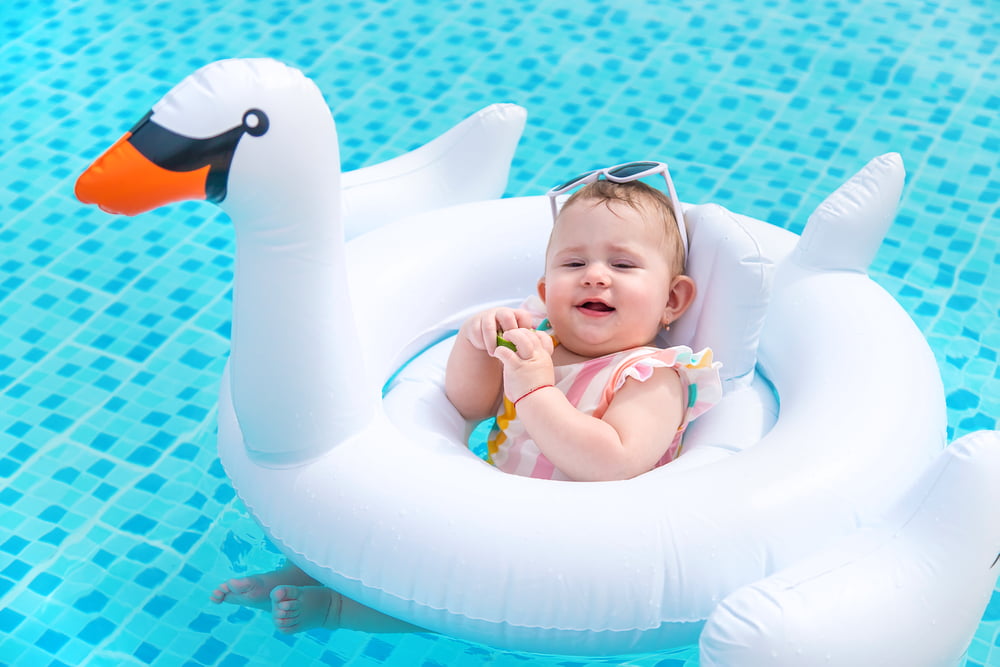
Many experts emphasize that puddle jumpers and arm floaties are potentially dangerous for children. These devices can help children develop incorrect and ineffective swimming posture since they hold them in a vertical position. This way, they use more of a bicycling motion when trying to swim, which can actually lead to drowning. 

It is essential for a child to know how to float on the back and keep that position should any issues arise in the water. These devices give parents and kids a false feeling of safety.

What should a 2-year-old have for swimming

Where can I find reliable and professional toddler swim lessons in San Diego?

If you’re looking for assistance teaching your child how to swim, look no further than The Plunge. Whether your child has a fear of water or dislikes water activities, our qualified and skilled professionals are at your service. We offer you a well-equipped venue where both you and your children can practice swimming skills. Here, you can also make a reservation for a corporate event or a party.

If you live near Balboa Park or in the surrounding areas, don’t hesitate to send us a message or give us a call.

4 Surprising Benefits of Swimming for Babies

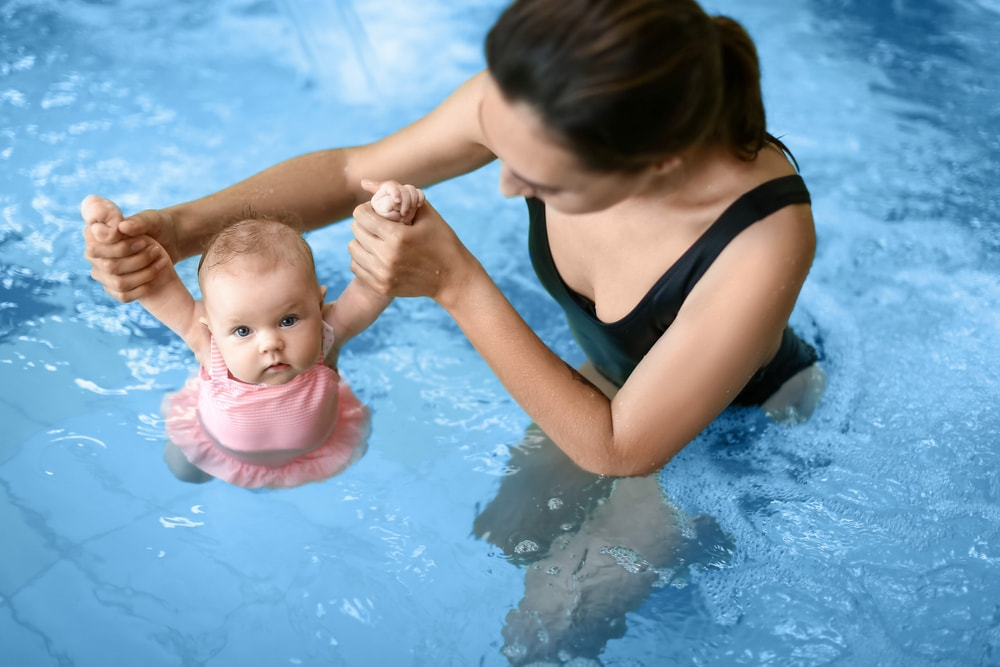
You‘re probably aware of all the benefits swimming has for your body and overall health, but did you know your baby can benefit a lot from it, too? Babies can swim from an early age because they’re born with a natural kicking reflex that lasts around 6 months. Some say this is a perfect period for engaging your baby in water activities, but if you want to be 100% sure, ages 1 and older are fine. Baths can help them prepare for pools, splashes, and the feeling of being in the water. 

Needless to say that safety is probably the most important thing if you decide to begin teaching your baby swimming. If you want the help of professionals, you can search for reliable and quality infant swim lessons in San Diego and the area. Keep reading to find out more about all the ways swimming can be a fun and healthy start in your little one’s life.

Why is it good to teach babies to swim?

Although a demanding and challenging job for parents, teaching your infant how to swim can give excellent results:

1. Improved cognitive functioning

Swimming is one of the activities that can develop your child’s cognitive skills and improve their critical thinking. Cross-patterning movements of swimming help your baby’s brain grow by stimulating both sides of it. This can boost language skills, and spatial awareness, while ensuring better academic performance for your child. 

2. Reduced risk of drowning

Swimming early will improve your kid’s water confidence and reduce the risk of drowning. American Academy of Pediatrics (AAP) states that drowning is one of the leading causes of death among children, which is why swimming lessons for them and their parents can be helpful. For extra security, your children should be supervised even if they’re attending swimming lessons.

3. Improved confidence

The interaction and fun group activities your baby will have while swimming will improve its overall confidence. Early learning and skill improvement will give your child a sense of accomplishment and a healthy self-image. They’ll function in groups from an early age which will ensure they feel more comfortable in social situations later on.

4. Health

Apart from developing its thinking, coordination, and balance, swimming can enhance your infant’s overall well-being. This light physical activity will strengthen your baby’s muscles and joints, it’ll also improve the strength of its cardiovascular system, as well as stimulate healthy metabolic processes. This water exercise will ensure your baby will have better sleeping and eating patterns.

What do babies learn in swimming lessons

What do babies learn in swimming lessons?

These are the lessons where babies and their caregivers are in the water together. Here, babies learn basic swimming skills, while the parents learn different ways to teach water safety to their children. Infants learn basic strokes, how to float, and most importantly – survival skills. The water in these swimming pools should be warm, your baby should be fully equipped, and swimming lessons should last up to 30 minutes.

Who offers quality and trustworthy infant swim lessons in San Diego and the surrounding areas?

If you’re not sure how to help your kid overcome the fear of swimming or how to teach your children basic swimming skills, the Plunge is at your disposal. With well-equipped quality swimming pools and trained and capable instructors, you can rest assured you and your little one will have the treatment you deserve. If you want to be more physically active, too, our pools and gym are ready for use. Our facility also offers other various services such as parties, corporate and private events, as well as production and filming.

If you’re near Mission Hills Park or Palm Canyon, visit our site and get your membership started today.

How to Help a Child Who Hates Swimming

We all wish to teach our children to swim at one point. It’s an essential part of growing up and a great way to prevent and overcome the fear of water at an early age. Naturally, you want to make sure your child can play and explore safely in the water. However, teaching your little ones to swim successfully is a challenge, especially if they don’t enjoy it or have a strong fear of water. 

Whether your child loves or hates it, learning to swim often requires the assistance of an expert. This is why many parents opt for trusted and professional kids swimming lessons in San Diego and the vicinity. If you’re a parent who wants to help your child who dislikes swimming, read on to learn more about different ways to do that.

What to do if a child hates swimming?

Show understanding and support

You should show them patience, understanding, and support. Explain to them you understand their fear of the unknown and tell them about your first experience in the water. Your little ones should know the benefits of swimming, and how interesting and fun it can become. Let them relax, and try to lessen any pressure or anxiety by showing that you believe in them. Encourage their enthusiasm for swimming by showing them how happy and proud you are.

Practice often with them

Make pool visits a regular part of your lives by going there at least once a week with your little one. You should also be ready to join them. Ensure they learn something new every time you’re in the water. Make sure they’re not too tired or hungry for water activities and they’re fully equipped for swimming. Normalize spending time by or in the water and let them provide you with some ideas how to spend time there. They’ll feel more appreciated and encouraged if they can participate and make decisions about their pool practices.

Make sure they have some fun

They shouldn’t feel like they’re going solely to practice. Instead, they should understand it as an opportunity to have fun while learning. Adapting to this new environment might go more smoothly if you’re having fun family moments in a pool. Come up with water activities that are not only swimming. Use inflatables or a ball to practice catch, make bubbles, or splash the water, as this can all encourage your kid to stop being afraid.

Why does my child hate swimming?

Children are often reluctant when faced with something that is unknown to them. They might feel like they’re in a strange, dangerous place, with no way out. They might not like being in the water as they don’t know how to behave. Some children prefer water and are excited about both bathing and swimming, while others enter the water unwillingly. Apart from that, one of the reasons for disliking water activities can be a traumatic experience. 

This is why a careful and supportive approach is key to getting some kids to like water. Step by step, they will overcome their fear, associate pool practices with something positive and fun, and become excellent swimmers.

How to Help a Child Who Hates Swimming

Who offers trusted and reliable kids’ private lessons in San Diego and the region?

If you want your toddler to learn basic swim skills, or you’re aware of all the benefits of baby swim lessons, or you have a kid who doesn’t like swimming, an ideal place is just around the corner. 

With years of experience under our belt, our knowledgeable and qualified instructors can help your child to learn to swim without fear. We offer swim lessons for every age group, from babies to adults and our pools fulfill all the necessary requirements. Apart from that, if you’re looking for a gym with pool, water aerobics, planning a party or a corporate event, look no further than the Plunge.

If you live near Cabrillo Recreation Center or Mission Trails Regional Park contact us and reap the benefits of our top-quality services. We’re looking forward to seeing you!

online waiver waiver app electronic waiver digital waiver